Prince Edward Island Solar Guide 2026: The Definitive Residential and Commercial Guide
Prince Edward Island may be Canada’s smallest province, but its commitment to green energy is incredibly ambitious. Backed by the provincial goal to reach net-zero emissions, the Island has transformed into one of the country's most fertile environments for solar technology.
In 2026, the financial blueprint for going solar has evolved. While federal programs like the Canada Greener Homes Grant and Loan have permanently wrapped up, a strong combination of updated PEI solar panel incentives, property-tied financing, and high baseline utility rates make solar panels a top-tier investment.
Whether you are a homeowner in Charlottetown looking to reduce rising electricity costs, a specialized agricultural operation in Kings County, or a local business managing commercial overhead, this Prince Edward Island Solar Guide 2026 provides all the regulatory, structural, and financial insights you need to optimize your installation.
Net Metering vs. Behind the Meter in Prince Edward Island
Connecting your solar asset to the island grid requires deciding between two engineering setups. Your selection determines how your system interacts with utilities like Maritime Electric or Summerside Electric.
1. Maritime Electric Net Metering in PEI
For the vast majority of residential systems, a standard grid-tied configuration is the most cost-effective and lucrative option.
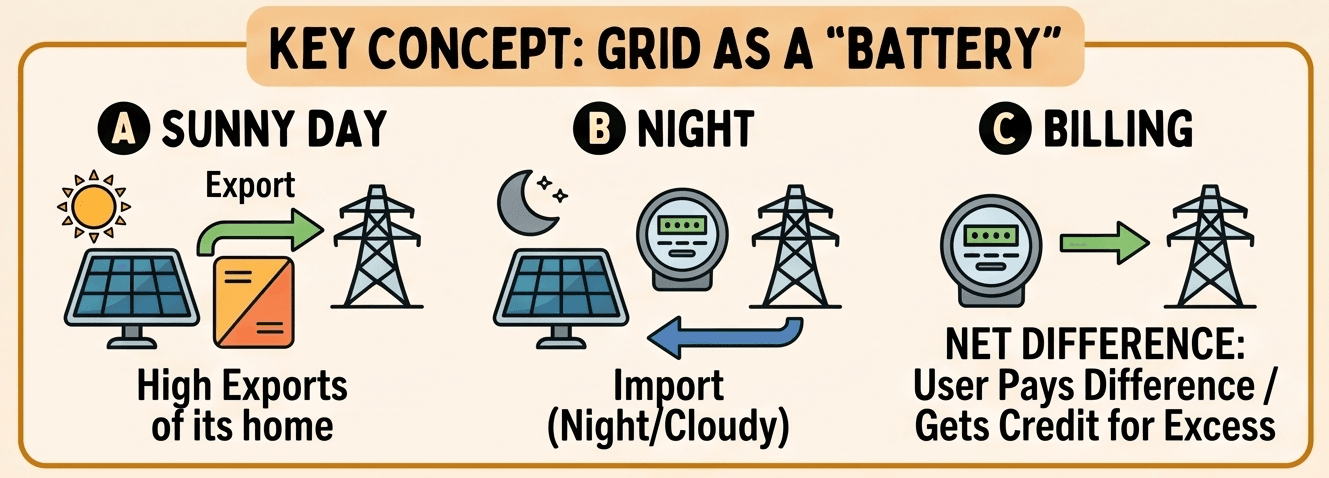
The Mechanism: Your system is connected directly to the grid through a specialized bi-directional meter. During sunny days, your solar panels power your home first. Any excess electricity is exported back into the grid.
The Billing Loop: Maritime Electric credits you on a strict 1:1 billing offset framework (these net metering credits have no cash value). If your panels export power at noon while you are away, those credits are captured and applied directly against the electricity you draw at night.
Seasonal Banking: Credits roll over progressively month-to-month. This allows you to accumulate a massive credit balance during the high-production summer months to wipe out your heating bills when winter snow limits panel output.
Note: The standard base customer utility service charge remains mandatory and cannot be eliminated using solar credits.
2. Behind the Meter (BTM / Load Displacement)
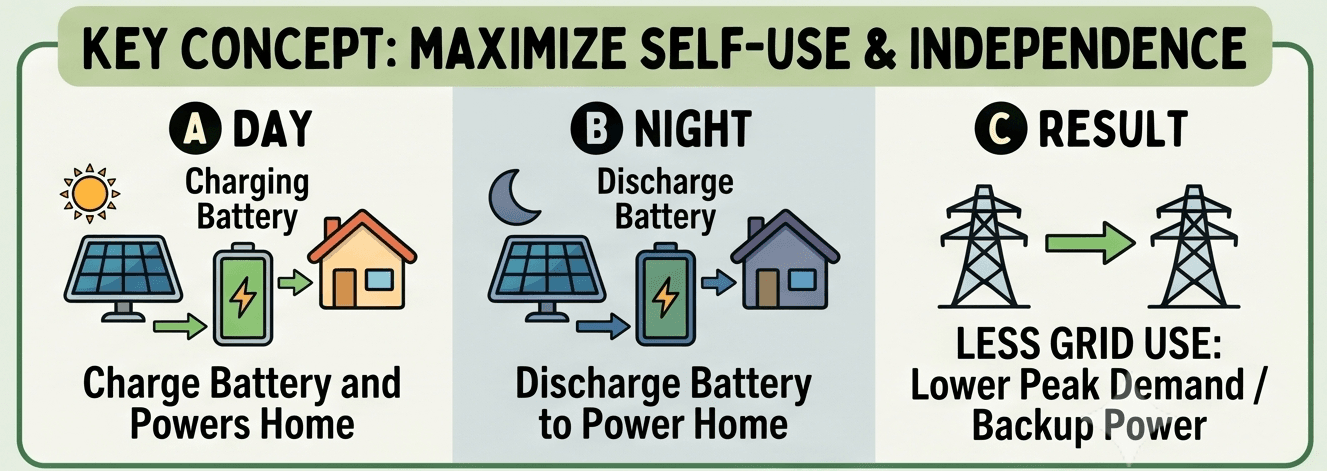
A behind-the-meter setup acts like a self-sustaining energy island, prioritizing immediate self-consumption and battery retention.
The Mechanism: All generated solar power stays strictly within the boundaries of your property. Excess energy is redirected to charge a high-capacity battery bank rather than flowing into the public grid.
The Advantage: For rural Island properties or coastal businesses susceptible to extreme weather disruptions and seasonal ice storms, a behind-the-meter setup provides uninterrupted backup power. It also guarantees total insulation from any future utility rate restructuring.
Financing & The Modern Incentive Landscape
The financial framework for installing solar on the Island has experienced a major shift. The efficiencyPEI Solar Electric Rebate program is closed to new applications, meaning there are currently no direct provincial or municipal government cash rebates available for residential or commercial solar installations.
However, this shift has not stalled the Island's energy transition. Instead, it has pushed the solar market to become highly competitive, moving the primary financial advantages toward innovative private dealer programs and robust federal tax provisions.
1. Residential Pathways: Private Installer Incentives & Financing
While traditional, government-funded PEI solar panel incentives are no longer an option for new applicants, homeowners have alternative paths to lower their net setup costs:
Private Solar Rebates from Installers: To keep solar highly accessible and offset the loss of government grants, many premier solar contractors across the Island now offer substantial private, in-house rebates, seasonal price-per-kilowatt reductions, or matching corporate incentives.
Tailored Solar Loans: Homeowners can leverage specialized private financing plans and low-interest solar loans provided directly through their turnkey installer, allowing minimum down payment setups that remain cash-flow positive from day one.
2. The Commercial Edge: Deep Federal Tax Credits
For enterprises executing a commercial solar installation in PEI-wide, the financial return remains exceptionally aggressive. Although provincial cash grants are gone, the federal tax credit provides massive, reliable relief to businesses, farms, and industrial operations:
The Federal 30% Clean Technology ITC: Canadian corporations can claim a 30% refundable Investment Tax Credit (ITC) on the total capital acquisition cost of their commercial solar system. Because it is a refundable tax credit, the Canada Revenue Agency (CRA) will issue a direct refund check for the full credit value if your business does not owe corporate tax that fiscal year.
Accelerated Capital Cost Allowance (CCA): Commercial entities can leverage clean energy write-offs under Class 43.1 or 43.2, enabling your business to depreciate 100% of the solar asset's cost in the very first year. Writing off the asset entirely in year one drastically lowers immediate corporate tax liabilities, compressing the project's overall payback timeline.
Secure Your Financial and Energy Independence
Transitioning to solar power on Prince Edward Island remains a highly strategic move. By combining Maritime Electric's powerful 1:1 net metering framework with private installer incentives or aggressive federal commercial tax credits, you can effectively lock in your energy overhead and turn your roof into a reliable, cost-saving asset.
Want to see if your roof or land footprint is optimized for solar? Reach out to our specialized Atlantic engineering team today. We will run a comprehensive, free property analysis, project your long-term ROI, and help you navigate the best private financing programs and federal tax provisions available to maximize your savings.
[Request Your Free PEI Solar & Savings Assessment Now]
People Also Ask
1. Are there any federal or provincial solar rebates available in PEI for 2026?
No. All traditional government-funded residential and commercial solar rebates—including the federal Canada Greener Homes Grant and the provincial efficiencyPEI streams—are completely closed to new applicants. To help offset upfront system costs, residential buyers should look for private solar installer rebates offered directly by top-tier local solar contractors.
2. Is there government financing or a PACE program available for PEI solar installations?
No, there are currently no active municipal PACE programs or provincial government loans (such as the old Finance PEI energy loan streams) available for new solar projects. Because of this, the landscape has shifted entirely to private financing channels. Most reputable turnkey solar providers on the Island now offer specialized, low-interest or 0% financing options.
3. If there are no government rebates, what financial incentives do PEI businesses and farms have left?
While direct government cash grants are gone, commercial enterprises, retail spaces, and agricultural operations still qualify for massive, highly lucrative federal tax incentives. Businesses can claim the 30% refundable Clean Technology Investment Tax Credit (ITC) to receive direct tax cash-backs and leverage the Accelerated Capital Cost Allowance (CCA) to write off 100% of the solar asset's cost in the very first year. This radically reduces your corporate tax liability and aggressively shortens your total payback period.
4. What is the maximum system size allowed under Maritime Electric's net metering program?
Under the current regulations governed by the Renewable Energy Act, residential and small commercial customers can build grid-tied net-metering systems up to a maximum inverter capacity of 100 kW. Systems must be sized accurately to offset your real, historical annual electrical load; over-sizing a system significantly beyond your property's annual consumption is not permitted under provincial micro-generation rules.