
Nova Scotia Solar Guide 2026: The Definitive Residential and Commercial Blueprint
Nova Scotia's solar landscape is undergoing a massive transition. For years, the province's solar boom was supercharged by generous upfront cash-back programs like the provincially funded SolarHomes rebate and federal grant incentives.
In 2026, the financial playbook has shifted. With standard upfront residential rebates officially closed, the financial case for solar in Nova Scotia now relies on two powerful drivers: skyrocketing utility rates and exceptional local grid-compensation rules.
Because Nova Scotia Power’s electricity rates hover around 20.3¢/kWh, every kilowatt-hour of clean energy your roof generates directly shields you from some of the highest power costs in the country. This comprehensive Nova Scotia Solar Guide 2026 breaks down the modern trends, connection pathways, and active municipal financing structures designed to maximize your return on investment (ROI).
The Trend of Solar in Nova Scotia
Historically, homeowners waited for a massive rebate cheque before committing to a solar array. In 2026, the primary motivator has shifted to long-term inflation protection.
With traditional coal and fossil-fuel generation being phased out, utility rates across the Maritimes face persistent upward pressure. As a result, the payback period for a residential solar system in Nova Scotia remains a highly competitive 8 to 12 years, even without the presence of the old SolarHomes grant.
Additionally, we are seeing a dominant shift toward municipal property-tied funding structures. By utilizing PACE financing Nova Scotia solar programs, property owners can bypass traditional bank loans and high-interest financing. These programs allow you to fund 100% of your installation upfront and pay it off slowly through an assessment on your property taxes, leaving your personal debt-to-income ratio completely untouched.
Net Metering vs. Behind the Meter in Nova Scotia
How you design your solar system dictates how you interact with Nova Scotia Power (NSP). The province supports two primary connection pathways:
1. Net Metering (The Self-Generating Option)
Nova Scotia is home to one of the most generous and robust net metering programs in Canada.
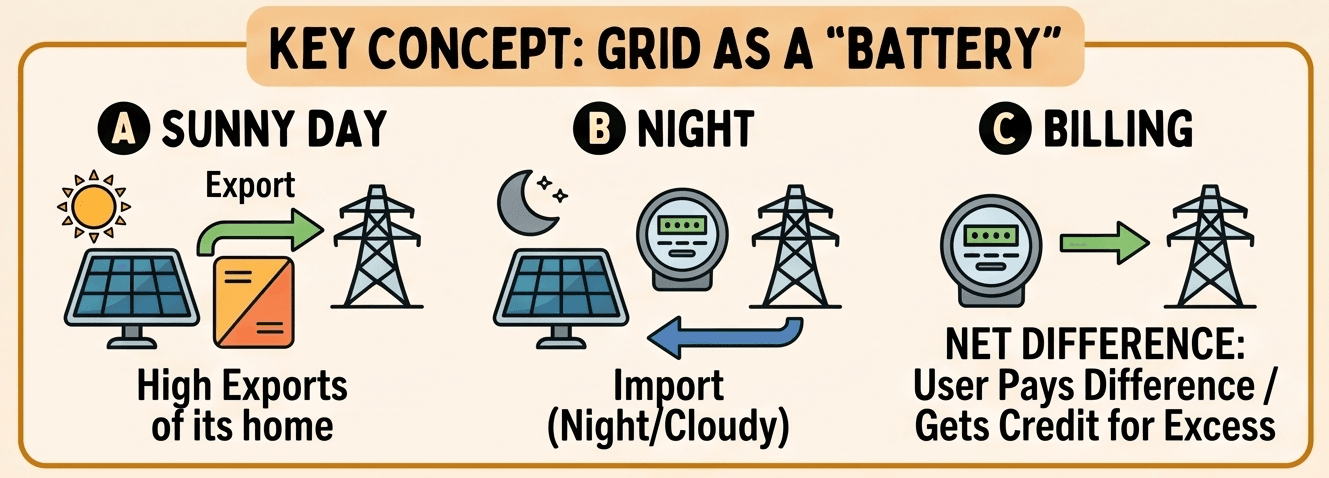
The Mechanism: Your solar system is tied directly to the grid via a bi-directional utility meter. When your panels generate excess energy during the day, it is exported to the grid. Nova Scotia Power offsets your bill on a 1:1 basis, giving you a kWh credit for every exported unit.
The Annual Cash-Out: Unused credits roll over monthly throughout the year. Uniquely, Nova Scotia Power conducts an annual settlement (typically on January 1). If you have generated a net surplus of energy over the course of the year, they pay you out for those excess credits that you can offset your bills in the next calendar year.
Note: The monthly base utility customer charge (currently $20.08) cannot be offset by solar credits; you must pay this base fee regardless of how much power you generate.
2. Behind the Meter (BTM / Load Displacement)
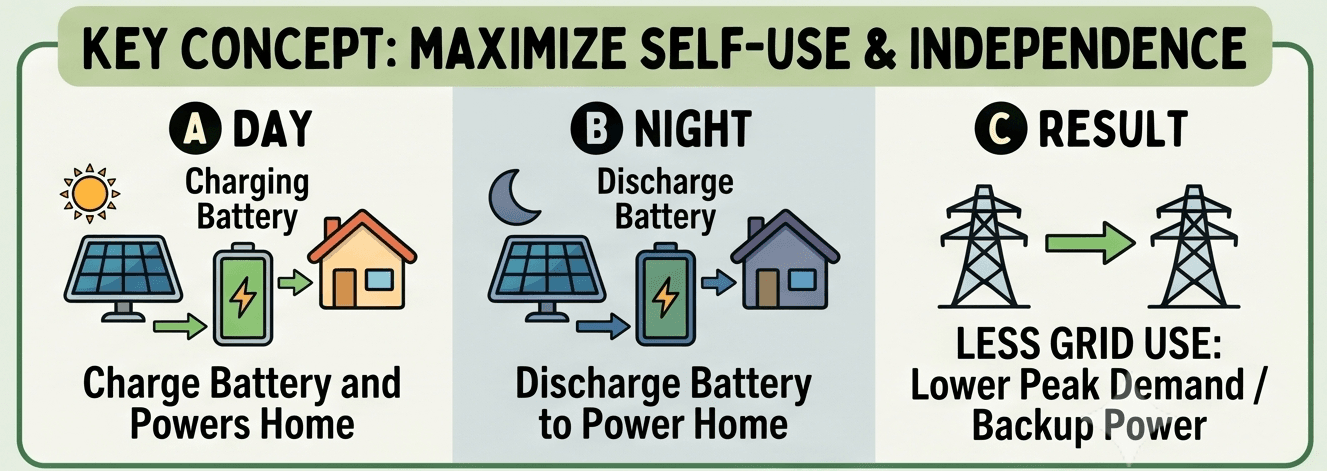
For those seeking true utility independence, a behind-the-meter setup pairs solar with a localized home energy storage system (such as a lithium-iron-phosphate battery bank).
The Mechanism: Your solar system feeds energy directly into your home and battery. No excess power is sent back into the provincial grid.
The Advantage: During a classic Maritime storm or winter ice event, a behind-the-meter battery system provides immediate, seamless backup power. It also ensures that 100% of your self-generated clean electricity is consumed locally on your property, entirely insulating you from future utility rate hikes.
Learn more about how Net Metering and Behind-the-meter work.
Residential and Commercial Rebates & Financing in 2026
While the landscape has evolved, significant financial aid and tax incentives remain active for both homeowners and businesses across the province.
Residential Programs & Financing
The PACE Landscape: While the province-wide Clean Energy Financing program run by the Clean Foundation has closed, localized PACE programs are highly active:
Halifax Solar City Program 2026: If you reside in the Halifax Regional Municipality (HRM), you can access financing with a fixed 4.75% interest rate over a 10-year term. The loan is applied as a Local Improvement Charge (LIC) on your property, meaning it is tied to the physical address, not you personally. If you move, the loan transfers seamlessly to the new home buyer.
Solar Colchester / Cozy Colchester: Residents in the Municipality of Colchester can access dedicated municipal financing with a 2.75% interest rate and up to a 15-year term to cover upfront solar capital costs.
EnergyForward New Homes Program: Administered by Efficiency Nova Scotia, this active 2026 program offers builders and homeowners constructing new single-family homes up to $25,000 in incentives. To hit the lowest annual energy bill targets ($0/year), integrating a solar PV system is practically mandatory.
Commercial & Institutional Programs
For enterprises deploying a commercial solar installation in Nova Scotia wide, the financial upside is incredibly aggressive:
The Federal 30% Clean Technology ITC: Canadian corporations can claim a 30% refundable investment tax credit (ITC) on the capital acquisition cost of their commercial solar array.
Accelerated Capital Cost Allowance (CCA): Commercial entities can write off 100% of their solar asset's cost in the very first year, helping to compress the payback periods for businesses.
Solar for Non-Profit Organizations: Efficiency Nova Scotia’s program helps registered charities and non-profit organizations transition to grid-tied solar. It provides a rebate of $0.60 per watt (DC) installed, covering up to 25% of system costs up to a maximum of $15,000.
Commercial Net Metering Program: Nova Scotia Power allows businesses to install renewable generation up to 1000 kWac (1 MWac) to offset their demands. If you operate a registered farm, winery, or aquaculture plant, or if your rate includes a demand charge, you qualify for this high-capacity tier. Other standard commercial properties can net-meter up to 200 kWac.
Take Charge of Your Nova Scotia Power Bill
The era of relying on passive energy grids is fading. By combining Nova Scotia Power's exceptional net-metering payout rules with regional PACE property-linked financing, you can effectively run your electrical meter backward and lock in your power costs for the next 25 to 30 years.
Ready to find out if your roof is a prime candidate for solar? Contact us today for a free virtual property assessment, custom solar design, and a detailed breakdown of the municipal financing programs active in your specific Nova Scotia community.
[Request Your Free Nova Scotia Solar & PACE Financing Assessment Now]
People Also Ask
1. Is the Efficiency Nova Scotia SolarHomes rebate still available in 2026?
No. The popular SolarHomes rebate program closed to new applications on April 17, 2025. Homeowners who secured approvals prior to the closure date were required to complete their installations by March 31, 2026, to receive their funding.
2. How does the Halifax Solar City financing program work?
The Halifax Solar City program 2026 is a PACE-structured financing tool. Property owners in the HRM can access a fixed 4.75% interest rate over a 10-year term to cover 100% of their solar installation costs. The balance is repaid via a Local Improvement Charge (LIC) on your property taxes. If you decide to sell your home before the 10 years are up, the remaining loan balance transfers directly to the new buyer.
3. Do I get paid in real cash for exporting excess solar energy to Nova Scotia Power?
Under the Nova Scotia Power net metering framework, excess generation is credited to your utility bill. If you have remaining energy credits at your annual anniversary date, Nova Scotia Power will credit your account at the full retail rate for those surplus kilowatt-hours.
4. Can a business combine the commercial net-metering program with federal tax credits?
Absolutely. Commercial operations can build systems up to 1 MWac under Nova Scotia Power's commercial net metering guidelines while simultaneously claiming the Federal 30% Clean Technology Investment Tax Credit (ITC) and the accelerated 100% first-year CCA depreciation write-off.