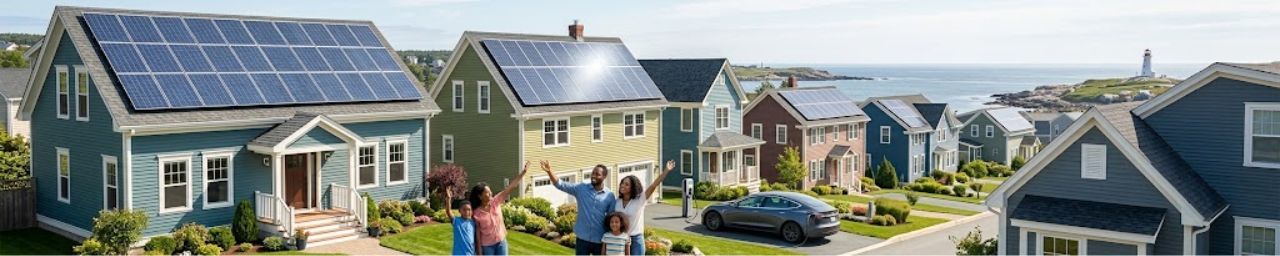
Nova Scotia Solar City Financing: Empowering a Cleaner, Brighter Future for Homeowners
Nova Scotia is well-known for its breathtaking coastlines, historic charm, and, unfortunately, famously unpredictable weather. However, beneath the passing clouds is a potent, underutilized resource: solar energy. Nova Scotians are increasingly looking for ways to gain energy independence, lower their electricity bills, and reduce their carbon footprint.
Recognizing this growing desire and the financial hurdles that often accompany it, municipalities across the province have sought innovative solutions. Foremost among these efforts is the concept of a Nova Scotia Solar City, a specialized approach to making renewable energy accessible to everyone. While "Solar City" often refers strictly to a specific program in the Halifax Regional Municipality (HRM), its philosophy is spreading throughout the province, reshaping how residents view energy generation.
Understanding Nova Scotia Solar City
At its core, Nova Scotia Solar City (most formally known as the Halifax Solar City Program) is an initiative designed to remove the primary barrier to adopting solar power: the high upfront cost of equipment and installation.
The program operates on a PACE financing model in Nova Scotia. PACE stands for Property Assessed Clean Energy. It is a unique financing tool that allows homeowners to finance the cost of a solar installation in Nova Scotia—including solar photovoltaic (PV) panels and often solar battery storage—directly through their property taxes.
Here is how it smoothly works for a homeowner:
- You receive a solar assessment to determine feasibility and estimated savings.
- If eligible, you sign a voluntary agreement with the municipality.
- A qualified contractor installs the solar system.
- The municipality pays the upfront costs.
- You repay the municipality over a fixed period (usually 10 years) through a separate line item on your property tax bill.
Because the financing is tied to the property, not the individual, if you sell your home before the financing is paid off, the remaining repayment often transfers smoothly to the new owner, who continues to enjoy the reduced energy costs.
Why Solar City is Vital for Solar Installation
The creation of the Halifax Solar City Program marked a massive shift in the provincial solar landscape. Its importance cannot be overstated for several key reasons.
Firstly, it democratizes access to green technology. By enabling a "$0 upfront cost" model, PACE financing opens the door to homeowners who might not have thousands of dollars in savings or access to traditional low-interest bank loans.
Secondly, it provides peace of mind. PACE programs typically involve a degree of municipal oversight, ensuring that contractors are properly licensed and that the estimated energy savings are realistic and verified by a third-party administrator. This rigorous approach minimizes the risks often associated with large-scale home energy improvements.
Lastly, by streamlining the process from financing to final inspection, the program has directly led to a dramatic increase in solar installations in Nova Scotia, accelerating the province’s overall transition away from fossil fuels toward a greener grid.
Stacking the Deck: Additional Financial Support
While Nova Scotia Solar City (PACE) provides an excellent financing mechanism, it is not the only financial tool available. In fact, wise homeowners "stack" PACE financing with other available support to maximize their home energy savings NS.
While PACE must be repaid, other programs offer non-repayable grants.
Efficiency Nova Scotia Solar Rebates - Closed For New Applications
The most significant local partner is Efficiency Nova Scotia. Their widely popular SolarHomes program in NS offers substantial rebates (currently based on the size of the system, in DC Watts) for installed residential solar PV systems. This rebate directly lowers the total amount of PACE financing you need to borrow, significantly shortening your overall payback period.
The Canada Greener Homes Grant and Loan - Closed For New Applications
On a federal level, homeowners across the province have access to the Canada Greener Homes initiatives. While the popular grant portion has experienced closures, the Canada Greener Homes Loan remains a vital tool, offering up to $40,000 in interest-free financing over 10 years for eligible retrofits.
Critically, federal support often explicitly includes solar battery storage in Nova Scotia. Combining battery storage with your PV panels allows you to store excess energy generated during the day for use at night or to provide critical backup power during NS Power outages. PACE financing can also frequently be utilized to cover the battery portion of an installation, making resilience affordable.
Take the Next Step Toward Energy Independence
The ocean winds may blow hard in Nova Scotia, but the sun is ready to work. If you are tired of rising utility rates and want to take control of your energy future, Nova Scotia Solar City and associated programs offer a clear, professional, and smoothly navigable path forward.
Do not let financial uncertainty prevent you from making a wise investment in your home and our planet. Contact us to check your eligibility for PACE financing, or reach out to begin stacking your incentives today.
People Also Ask
1. Is "Nova Scotia Solar City" only available in Halifax?
Technically, yes. "Solar City" is the brand name of the Halifax Regional Municipality (HRM) program. However, several other municipalities and towns across Nova Scotia are now offering similar voluntary property tax financing models (PACE). You should check your local municipality's official website to see if a voluntary property-tax financing program is available in your region.
2. Does the PACE loan transfer automatically to the new owner if I sell?
In most Nova Scotia municipalities using the PACE model, the low-interest financing obligation is legally tied to the property (the PID), not the homeowner. The assumption is that the new owner is receiving a valuable asset (the solar system) that lowers their operational costs, and therefore they smoothly assume the remaining repayments through their property taxes. This is often viewed as a strong selling point for energy-efficient homes in the NS real estate market.
3. Can I stack rebates if I am not part of the Solar City/PACE program?
Absolutely. You can leverage the Efficiency Nova Scotia solar rebates and federal Canada Greener Homes Loan regardless of how you choose to finance the remaining cost (e.g., through a bank, line of credit, or PACE). You do not need municipal financing to be eligible for rebates.
4. Will PACE or rebates pay for solar batteries in Nova Scotia?
Yes. Both the federal loan program and most municipal PACE financing programs allow homeowners to include the cost of certified solar battery storage Nova Scotia systems as part of their broader energy project, provided the battery is being paired with solar PV panels. It is crucial to verify specific equipment eligibility before making a purchase.